 Guide
GuideWhat is Rosacea? Symptoms, Types & Diagnosis
An evidence-based guide to rosacea signs, overlapping presentations, and how clinicians make a diagnosis.

Rosacea Beauty Editorial Team
Jul 19, 2026 · 9 min read
Rosacea is a long-term inflammatory condition that mainly affects the center of the face — especially the cheeks, nose, chin, and forehead. It may cause episodes of flushing, color that does not fully fade, visible blood vessels, acne-like bumps, uncomfortable skin, eye irritation, or thickened skin. Symptoms often flare and settle rather than staying exactly the same.
What does rosacea feel and look like?
No two cases look identical. A person may have one dominant sign or several that overlap, and the pattern can change over time. Common signs and symptoms include:
- Frequent flushing or a feeling of heat across the central face.
- Persistent facial color that may appear red, pink, violet, brown, or dusky depending on skin tone.
- Fine, visible blood vessels, especially around the cheeks and nose.
- Inflamed bumps (papules) and pus-filled spots (pustules), usually without the blackheads typical of acne.
- Burning, stinging, tightness, dryness, swelling, or unusually sensitive skin.
- Eye or eyelid symptoms such as dryness, grittiness, burning, redness, watering, light sensitivity, crusting, or recurring styes.
- Thickened or bumpy skin, most often on the nose; this is less common and usually develops gradually.
Are there four types of rosacea?
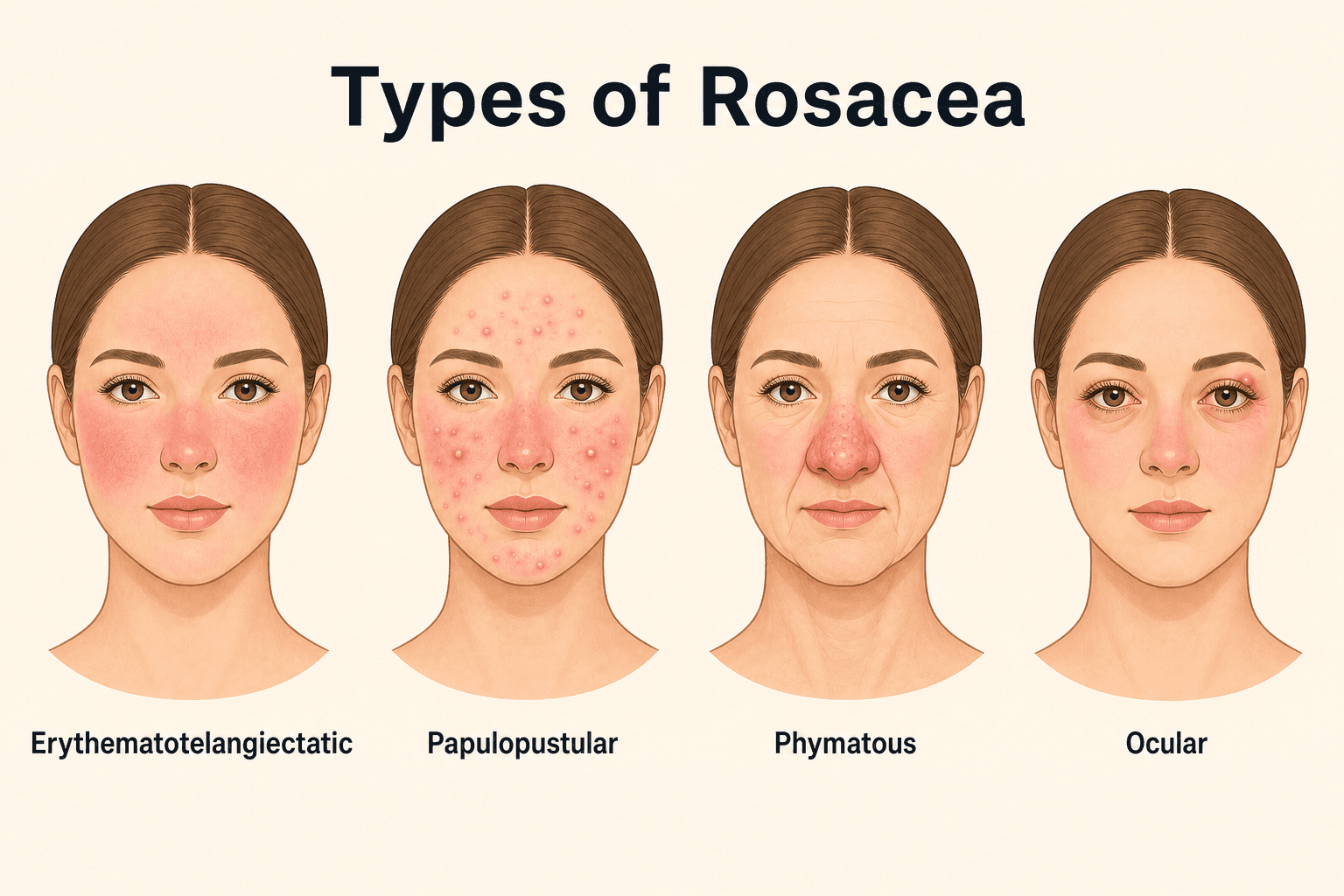
You may still see rosacea described as four subtypes. These traditional labels are useful shorthand, but expert guidelines now favor a phenotype-based approach: clinicians record each visible or felt feature and treat the features you actually have instead of placing every person in one fixed box.
Erythematotelangiectatic
Flushing, persistent facial color, and visible blood vessels.
Read the guidePapulopustular
Inflamed bumps and pustules that can resemble acne.
Read the guidePhymatous
Thickened, uneven skin, most commonly affecting the nose.
Read the guideOcular
Inflammation involving the eyes and eyelids, sometimes without obvious skin signs.
Read the guideHow is rosacea diagnosed?
There is no single blood test, scan, or swab that confirms rosacea. A clinician usually diagnoses it from the pattern of your symptoms, your medical history, and an examination of your skin and eyes. Because signs may disappear between flares, dated photos and a brief symptom or trigger diary can be helpful at an appointment.
Under current expert criteria, persistent color in the central face or phymatous skin change can be diagnostic. A combination of major features — such as flushing, papules and pustules, visible vessels, and certain eye signs — can also support the diagnosis. These criteria guide clinicians; they are not a self-diagnosis checklist.
- Where the symptoms appear and whether they come and go.
- Flushing, persistent color, visible vessels, bumps, skin thickening, and eye or eyelid changes.
- Burning, stinging, dryness, swelling, and possible personal triggers.
- Medicines, skincare products, sun exposure, and other health conditions.
- Whether another condition could explain the pattern.
When should you seek medical care?
Arrange a routine appointment if facial flushing, persistent color, bumps, discomfort, or eyelid irritation keeps returning. Earlier assessment can reduce uncertainty, identify look-alike conditions, and help prevent symptoms from becoming harder to manage.
The takeaway
Rosacea is a chronic, manageable condition with a wide range of overlapping skin and eye features. A diagnosis is based on the overall pattern — not one photo or test — and modern care is tailored to the specific features affecting you.
Sources
Reviewed against guidance and consensus from established medical organizations.
- 1.American Academy of Dermatology. Rosacea: Signs and symptoms (opens in a new tab)
- 2.American Academy of Dermatology. Rosacea: Diagnosis and treatment (opens in a new tab)
- 3.National Rosacea Society Expert Committee. Standard classification and pathophysiology of rosacea: 2017 update (opens in a new tab)
- 4.National Institute of Arthritis and Musculoskeletal and Skin Diseases. Rosacea: Diagnosis, Treatment, and Steps to Take (opens in a new tab)
- 5.NHS. Rosacea (opens in a new tab)
Comments(0)
No comments yet.
