 Guide
GuideOcular Rosacea: Eye Symptoms, Diagnosis & When to Seek Urgent Care
Recognize ocular rosacea symptoms, understand how it is assessed, and know which eye changes need urgent medical care.

Rosacea Beauty Editorial Team
Jul 19, 2026 · 7 min read
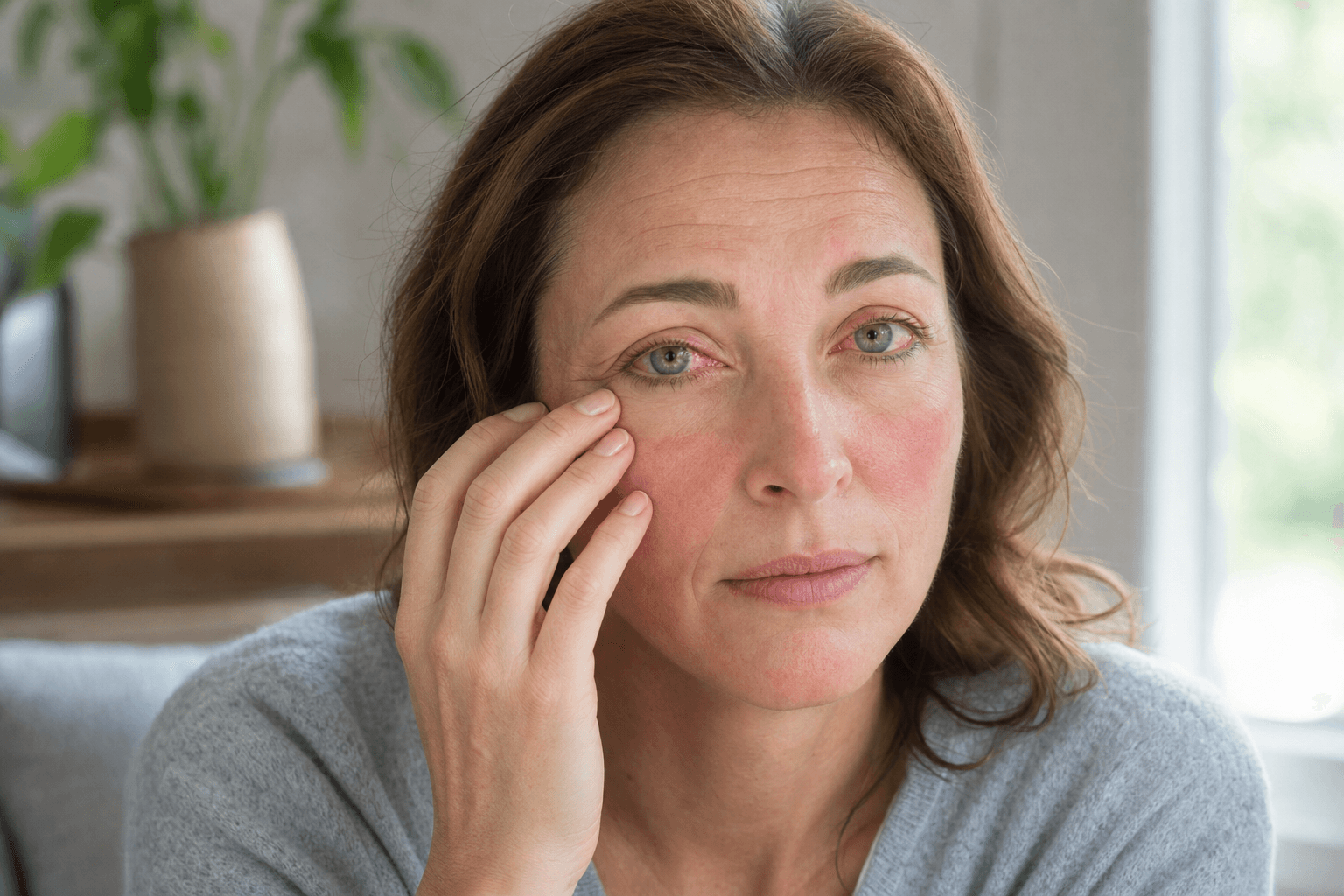
Ocular rosacea affects the eyes and eyelids. It can occur before, after, or alongside facial rosacea, and eye severity does not always match the amount of visible skin change. Some people have eye symptoms with few obvious signs on the face.
Common eye and eyelid signs
- Dryness, grittiness, burning, itching, stinging, or a feeling that something is in the eye.
- Watery, red, or bloodshot eyes and sensitivity to light.
- Red, swollen, or sore eyelid margins.
- Crusts or debris around the eyelashes.
- Recurring styes or painless eyelid cysts (chalazia).
- Blurred or fluctuating vision in more serious cases.
How it is diagnosed
There is no single confirmatory test. Diagnosis is based on symptoms, medical history, and examination of the eyes, eyelid margins, tear film, and facial skin. Clinicians also consider dry-eye disease, allergy, infection, meibomian gland dysfunction, medication effects, and other inflammatory eye conditions.
Care is tailored to severity
- A clinician may recommend a specific eyelid-hygiene and warm-compress routine.
- Lubricating eye drops may help dryness, but the correct product depends on the eye surface and other conditions.
- Prescription eye or oral medicines may be used to control inflammation when appropriate.
- Dermatology and ophthalmology care may be coordinated when skin and eye symptoms overlap.
- Sight-threatening disease requires prompt ophthalmology assessment.
Prepare for an appointment
Note when symptoms began, whether one or both eyes are affected, changes in vision, contact-lens use, recurring styes, facial flushing, and all drops or products used. Bring photos if swelling or redness comes and goes.
Sources
Reviewed against guidance and consensus from established medical organizations.
- 1.American Academy of Dermatology. Rosacea: Signs and symptoms (opens in a new tab)
- 2.American Academy of Dermatology. Do you have to treat rosacea? (opens in a new tab)
- 3.American Academy of Dermatology. Rosacea: Diagnosis and treatment (opens in a new tab)
- 4.NHS. Rosacea (opens in a new tab)
- 5.Global ROSacea COnsensus panel. Recommendations for rosacea diagnosis, classification and management: 2019 update (opens in a new tab)
Comments(0)
No comments yet.
