 Guide
GuidePapulopustular Rosacea: Bumps, Pustules & How It Differs From Acne
How to recognize rosacea-related papules and pustules, distinguish common look-alikes, and prepare for assessment.

Rosacea Beauty Editorial Team
Jul 19, 2026 · 7 min read
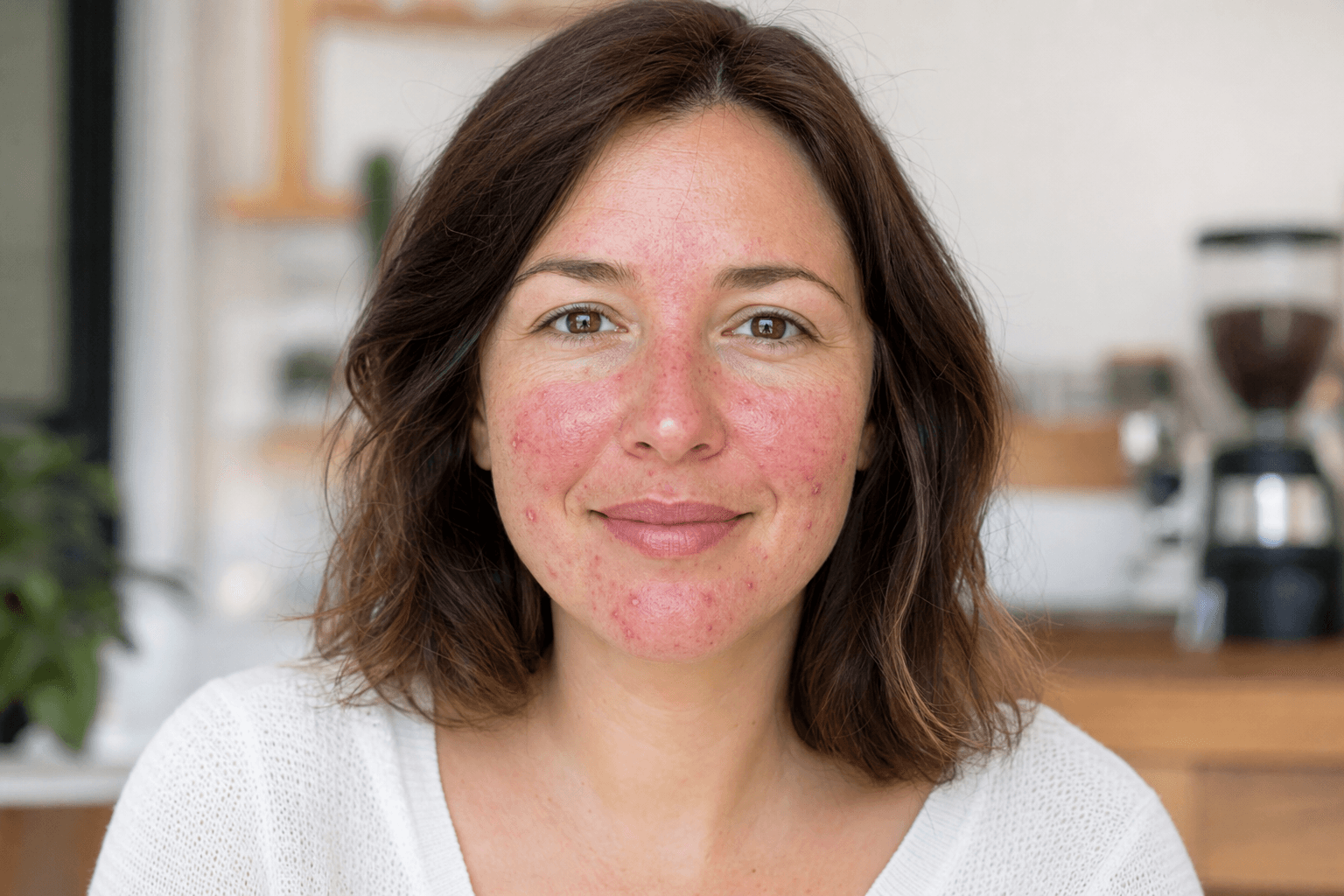
Papulopustular rosacea is a traditional label for rosacea in which inflamed red bumps (papules) and pus-filled spots (pustules) are prominent. They usually appear across the central face and may occur with flushing, persistent color, visible vessels, sensitive skin, or eye symptoms.
What it may look and feel like
- Clusters of dome-shaped red bumps, with or without visible pus.
- Breakouts concentrated on the cheeks, nose, chin, or forehead.
- Persistent facial color or flushing around the bumps.
- Burning, stinging, dryness, swelling, or sensitivity to skin products.
- Dark marks may remain after inflammation, especially on deeper skin tones.
How it differs from common look-alikes
Acne often includes blackheads, whiteheads, and breakouts beyond the central face. Perioral dermatitis tends to cluster around the mouth, nose, or eyes; seborrheic dermatitis often brings greasy scale around the nose, eyebrows, ears, or scalp. Steroid-related facial eruptions and contact reactions can also mimic rosacea. For a side-by-side overview, see rosacea vs acne. A clinician can assess the full pattern and whether more than one condition is present.
The Demodex connection
Many people with papulopustular rosacea have higher densities of Demodex mites on the face. These microscopic mites live in hair follicles and oil glands of most adults, but an overgrowth or inflammatory response can look a lot like rosacea bumps and pustules. That overlapping picture is often discussed as demodicosis — related to rosacea, but not the same diagnosis.
What assessment involves
Diagnosis is based on the appearance and location of lesions, associated flushing or sensitivity, eye symptoms, history, and medicines or products used. There is no single test for papulopustular rosacea. Testing or biopsy is considered only when the pattern is unusual or another diagnosis — including demodicosis or other look-alikes — needs exclusion.
Evidence-based management overview
- Gentle cleansing, moisturizer, and daily sun protection form the foundation of care.
- A trigger diary may reveal personal patterns without requiring broad, unnecessary restriction.
- Clinicians may select topical anti-inflammatory or antiparasitic medicines (including options with Demodex activity) for mild-to-moderate inflammatory lesions.
- Oral anti-inflammatory treatment may be considered for more extensive or persistent disease.
- Results are gradual; AAD guidance notes that visible improvement often takes weeks, with a clearer difference after two to three months.
When to seek care
See a clinician when facial bumps persist, scar, cause pain, or do not respond as expected to acne care. Prompt assessment is also important when symptoms involve the eyes.
Sources
Reviewed against guidance and consensus from established medical organizations.
- 1.American Academy of Dermatology. Rosacea: Signs and symptoms (opens in a new tab)
- 2.American Academy of Dermatology. Rosacea: Diagnosis and treatment (opens in a new tab)
- 3.National Rosacea Society. Medical Therapy for Rosacea (opens in a new tab)
- 4.National Rosacea Society. Causes of Rosacea: Demodex Mites & Microbes (opens in a new tab)
- 5.Global ROSacea COnsensus panel. Recommendations for rosacea diagnosis, classification and management: 2019 update (opens in a new tab)
Comments(0)
No comments yet.
