My Rosacea Journey · Part 1
How It Began
By Anastasiia K., founder of rosacea.beauty
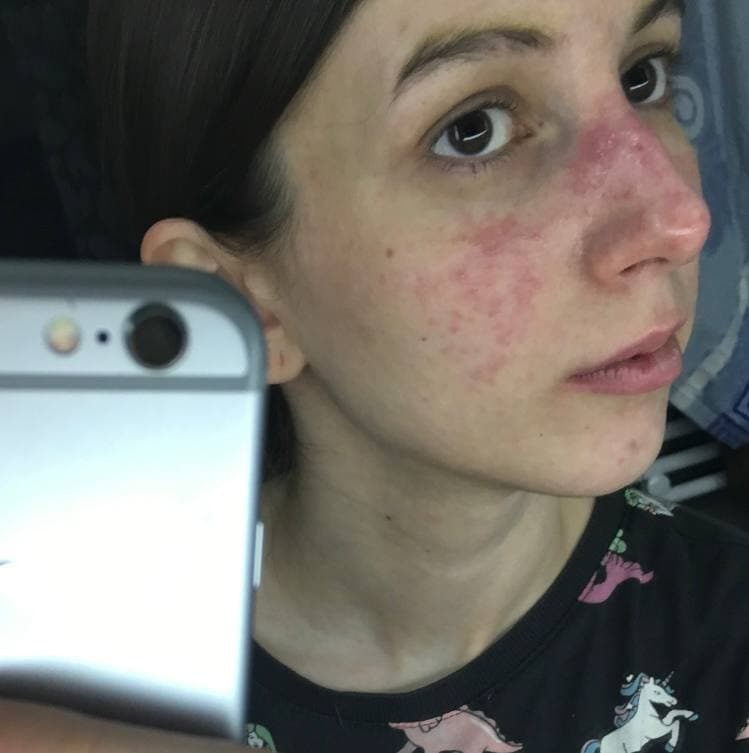
In late 2019, I felt my face burn for the first time. It happened right after losing a relative — grief and stress hitting all at once. It felt like someone had rubbed cayenne pepper across my skin.
I didn't know what rosacea was yet, let alone that it would become my diagnosis. I had visible vessels on my cheeks — what's often called couperose — but I told myself it was just blood vessels and stress. It would pass in a few days. And it did. Until it happened again. And again.
Over time, it stopped being occasional. My face started breaking out in small bumps, and the burning came back in waves, unpredictable, with no obvious trigger I could point to.
Turning to the internet — and then to a dermatologist
I did what a lot of people do: I searched my symptoms. The more I read, the more it looked less like stress and more like rosacea. That was enough to push me to actually look for help — specifically, a dermatologist with real experience treating rosacea, not just a general skin doctor.
My first dermatologist confirmed what I'd started to suspect. She was honest with me in a way I still appreciate: rosacea can't be cured, but it can be brought into remission. That reframing — not "fixed," but "managed" — was hard to hear at first, but it also gave me something to work toward.
An unexpected diagnosis: H. pylori
She ordered a long list of blood work and sent me for a gastroscopy to check my stomach. That's where things took a turn I didn't expect — the test came back positive for H. pylori, a bacteria linked to stomach inflammation that, for some people, is also connected to rosacea flare-ups.
(I'm writing a separate article on the H. pylori–rosacea connection — I'll link it here once it's up, for anyone who wants to understand that link in more depth.)
Treating the H. pylori infection took three months of antibiotic therapy. Alongside that, I was prescribed Elidel cream for my skin. There was improvement — but it was modest, not the turnaround I'd hoped for. That's when my dermatologist first mentioned laser therapy as a next step, which is its own story I'll tell in Part 2.
Trial, error, and a lot of stinging
While all of this was happening medically, I was also trying to find skincare that wouldn't fight against my skin. I tried the Holy Land line, along with a few others I honestly don't remember the names of anymore. Almost every time, the pattern was the same: within about five minutes of washing my face or applying a cream, the flushing would start, and my skin would break out even more.
It took a lot of trial and error — and a lot of setbacks — before I landed on Image Skincare's Vital C line, which was finally something my skin could tolerate. It wasn't a cure. It was just something I could actually use without making things worse. At that point, that felt like progress.
That's where this really started: not with an answer, but with the beginning of a very long process of figuring things out one step at a time.
Part 2 continues with laser therapy — what my dermatologist recommended, what the experience was actually like, and what changed after.
Sources / further reading on this site
- What is Rosacea? Symptoms, Types & Diagnosis
- Couperose vs Rosacea: What's the Difference?
- IPL & Laser Therapy: What to Expect
- H. pylori and Rosacea (coming soon)