 Guide
GuideErythematotelangiectatic Rosacea: Redness, Flushing & Visible Vessels
An evidence-based guide to persistent facial redness, flushing, and visible blood vessels in rosacea.

Rosacea Beauty Editorial Team
Jul 19, 2026 · 7 min read
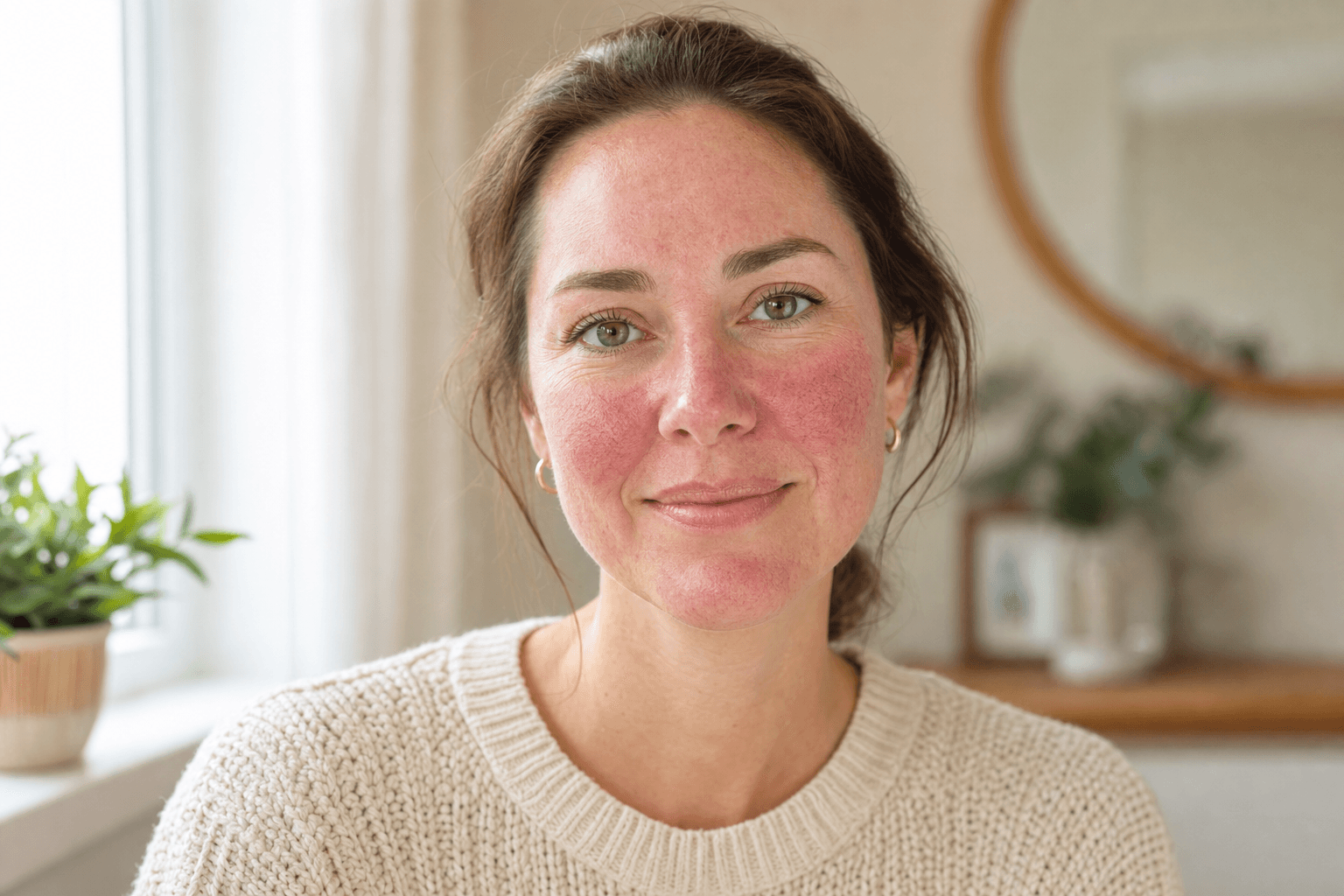
Erythematotelangiectatic rosacea (often shortened to ETR) is a traditional name for a pattern dominated by flushing, persistent color in the center of the face, and small visible blood vessels. Modern guidelines describe these individual features as phenotypes rather than placing every person in one fixed subtype.
Common signs and sensations
- Flushing or warmth that comes and goes, often across the cheeks, nose, chin, or forehead.
- Persistent facial color that may intensify during a flare.
- Fine visible blood vessels (telangiectasia), especially around the cheeks and nose.
- Burning, stinging, tightness, dryness, or skin that reacts easily to water and products.
- Swelling may occur, and bumps or eye symptoms can overlap with this pattern.
How clinicians assess it
Rosacea is diagnosed clinically: a clinician examines the distribution and pattern of color, vessels, skin sensitivity, and any bumps or eye changes, then reviews how symptoms behave over time. There is no single confirmatory blood test. Photos taken during a flare and a short trigger diary can help when symptoms are intermittent.
Contact dermatitis, seborrheic dermatitis, lupus, medication reactions, sun damage, and other causes of facial redness can look similar. In some countries the word “couperose” is used for redness and visible vessels — see couperose vs rosacea for how that label relates to erythematotelangiectatic features. Testing is usually reserved for cases where another condition needs to be ruled out.
Management is matched to the feature
- Daily broad-spectrum sun protection and gentle, fragrance-free skin care support the skin barrier.
- Identifying personal triggers can reduce avoidable flares; common examples include heat, sunlight, stress, alcohol, spicy foods, and hot drinks, but triggers differ between people.
- Clinicians may discuss prescription options that temporarily reduce persistent facial color.
- Vascular laser or light procedures may reduce visible vessels and persistent color when performed by an experienced medical professional.
- More than one approach may be needed when redness, bumps, or eye symptoms overlap.
When to seek care
Arrange an assessment when flushing or persistent facial color keeps returning, causes discomfort, or is changing. Seek urgent medical care for eye pain, vision changes, marked light sensitivity, or a very red eye.
Sources
Reviewed against guidance and consensus from established medical organizations.
- 1.American Academy of Dermatology. Rosacea: Signs and symptoms (opens in a new tab)
- 2.American Academy of Dermatology. Rosacea: Diagnosis and treatment (opens in a new tab)
- 3.National Rosacea Society Expert Committee. Standard Management Options for Rosacea (opens in a new tab)
- 4.Global ROSacea COnsensus panel. Recommendations for rosacea diagnosis, classification and management: 2019 update (opens in a new tab)
Comments(0)
No comments yet.
