 Guide
GuideRosacea vs Acne: Are They Similar?
Rosacea and acne can look alike, especially with red bumps and pustules — but they are different conditions. Learn the key differences, why treatment is not the same, and when to see a clinician.

Rosacea Beauty Editorial Team
Jul 22, 2026 · 8 min read
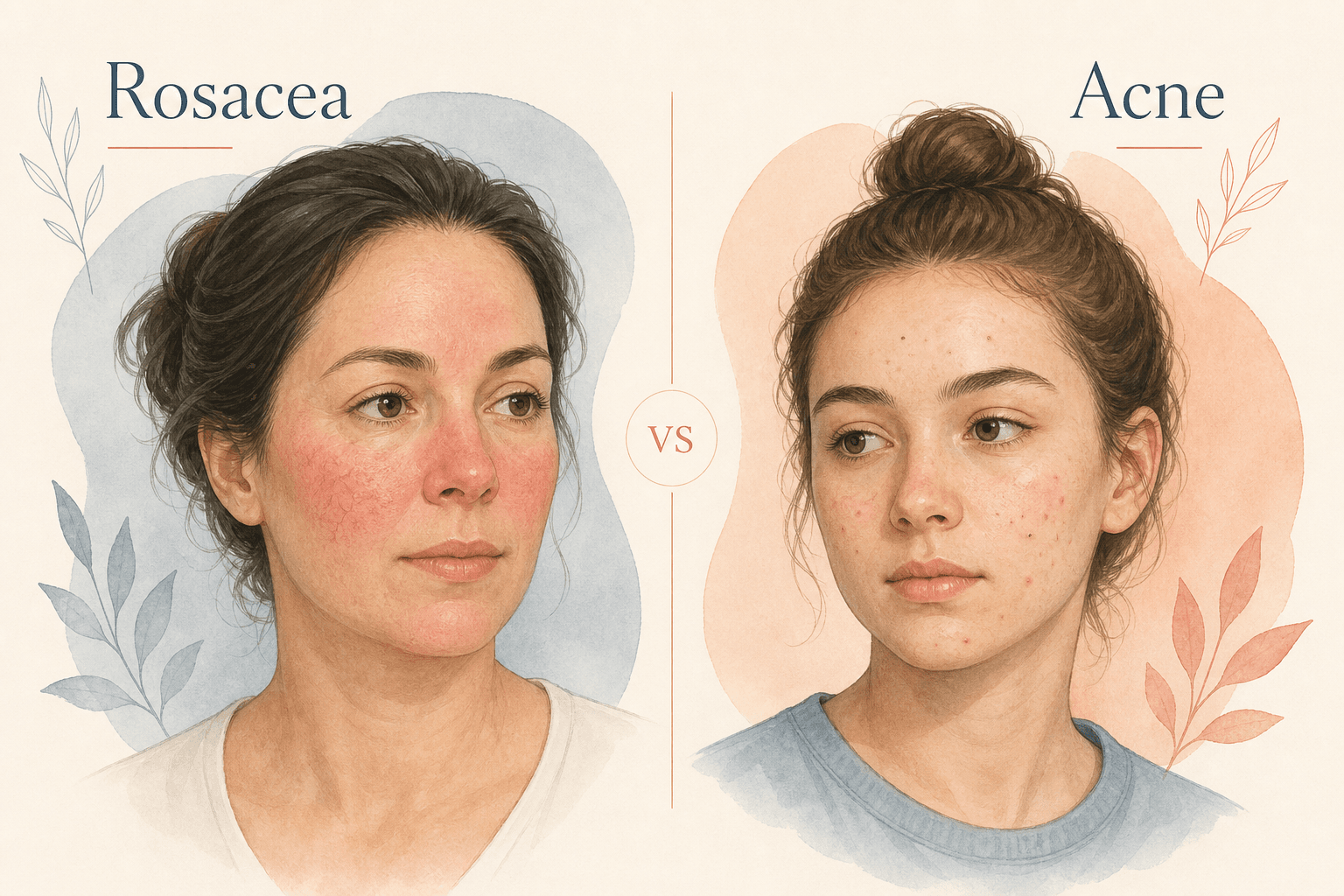
Rosacea and acne can look similar — both may cause red bumps and pustules on the face — but they are not the same condition. Rosacea is a chronic inflammatory disorder often marked by flushing, persistent facial color, and visible blood vessels. Acne is driven mainly by clogged pores, oil, and inflammation, and typically includes blackheads or whiteheads. Treating one as if it were the other can delay relief and irritate sensitive skin.
Are rosacea and acne the same?
No. Older language sometimes called inflammatory rosacea “acne rosacea,” which still confuses people searching online. Clinically, rosacea is not a form of acne. What is rosacea? covers flushing, lasting color, vessels, bumps, eye symptoms, and thickened skin. Acne centers on comedones (clogged pores) and inflammatory lesions that can appear on the face, chest, and back.
How do symptoms differ?
Acne commonly includes blackheads and whiteheads. Rosacea usually does not. Rosacea more often brings easy flushing, color that lingers in the center of the face, visible vessels, burning or stinging, and sometimes eye irritation. Papulopustular rosacea is the pattern that most often gets mistaken for adult acne because of red bumps and pustules on a background of redness.
- Rosacea clues: flushing, persistent central facial color, visible vessels, sensitive or stinging skin, possible eye symptoms, bumps without blackheads.
- Acne clues: blackheads or whiteheads, oily skin in many people, lesions that may extend to the chest or back, often starting in the teen years (though adult acne is common too).
- Shared look: red papules and pustules — appearance alone is not a diagnosis.
Rosacea vs acne at a glance
Comedones
Rosacea
Typically absent (no classic blackheads/whiteheads)
Acne
Common — blackheads and whiteheads are hallmark features
Redness & vessels
Rosacea
Flushing, lasting color, and visible blood vessels are common
Acne
Redness is usually tied to inflamed lesions, not persistent facial flushing
Where it appears
Rosacea
Mainly central face (cheeks, nose, chin, forehead)
Acne
Face, and often chest, back, or shoulders
Age pattern
Rosacea
Often begins in adults around age 30 and older
Acne
Very common in teens and young adults; can continue or start in adulthood
Skin feel
Rosacea
Often sensitive — burning, stinging, or product intolerance
Acne
May feel oily; sensitivity varies
Eyes
Rosacea
Eye irritation can occur (ocular rosacea)
Acne
Eye involvement is not a typical acne feature
Triggers
Rosacea
Heat, sun, spicy food, alcohol, stress, and other personal triggers
Acne
Hormones, oil, pore clogging, bacteria, and some products or friction
Can you have both?
Yes. Acne and rosacea can coexist, and other look-alikes (such as perioral dermatitis) can muddy the picture. A clinician looks at the full pattern — comedones, flushing, vessels, eye symptoms, age of onset, and where lesions sit — rather than a single photo. Self-labeling “adult acne” from social media is a common reason people delay the right care.
Why treatment differs
Acne care often focuses on unclogging pores and reducing Cutibacterium acnes–related inflammation (for example, benzoyl peroxide, salicylic acid, or retinoids). Rosacea care prioritizes reducing inflammation, calming reactivity, and protecting a fragile barrier — plus trigger awareness and, when needed, prescription topicals or oral therapy chosen for rosacea features. Aggressive acne routines can burn and flare rosacea-prone skin. For a fuller side-by-side of approaches, see rosacea vs acne treatment. A rosacea-friendly skincare routine starts gentle: cleanse, moisturize, and daily sun protection.
When to see a clinician
- Breakouts persist despite standard acne care, or products cause burning and more redness.
- You notice frequent flushing, color that does not fully fade, or visible vessels.
- Eye grittiness, redness, or light sensitivity appears with facial symptoms.
- You are unsure whether lesions are comedones, rosacea bumps, or both.
Papulopustular rosacea
The acne-like bump pattern that is most often confused with adult acne.
Read the guideWhat is rosacea?
Symptoms, presentations, and how clinicians approach diagnosis.
Read the guideRosacea-friendly routine
A gentle foundation that supports sensitive, redness-prone skin.
Read the guideSources
Reviewed against guidance and consensus from established medical organizations.
- 1.American Academy of Dermatology. Is that acne or rosacea on your skin? (opens in a new tab)
- 2.American Academy of Dermatology. Rosacea: Signs and symptoms (opens in a new tab)
- 3.National Institute of Arthritis and Musculoskeletal and Skin Diseases. Rosacea (opens in a new tab)
- 4.National Institute of Arthritis and Musculoskeletal and Skin Diseases. Acne (opens in a new tab)
- 5.Stanford Medicine 25. Acne vs. Rosacea (opens in a new tab)
Comments(0)
No comments yet.
